When a vehicle repeatedly fails to perform as expected, many California consumers expect the manufacturer to stand behind its warranty obligations. Instead, some are met with a different response: The issue is attributed to “user error,” “driver behavior,” or “normal operating characteristics.”
These explanations can be frustrating and confusing, particularly when the problem continues despite multiple repair attempts. More importantly, they are often used to deflect responsibility rather than resolve the underlying defect. Under the California Lemon Law, a manufacturer cannot avoid liability simply by shifting blame to the driver without sufficient evidence.
Understanding how these arguments arise and how to respond to them is critical when protecting your rights.
Why Manufacturers Rely on “User Error” Defenses
Modern vehicles generate large amounts of diagnostic data and rely heavily on software-driven systems. When a defect is intermittent or difficult to reproduce, manufacturers may attribute the issue to external factors rather than acknowledge a systemic problem.
Common explanations include:
- The driver is operating the vehicle incorrectly.
- The condition is a normal characteristic of the vehicle.
- The issue cannot be duplicated under testing conditions.
- Environmental or road conditions caused the behavior.
- No fault codes are present to confirm a defect.
These arguments are often introduced when the manufacturer lacks a clear repair solution or when repeated attempts have failed to resolve the issue.
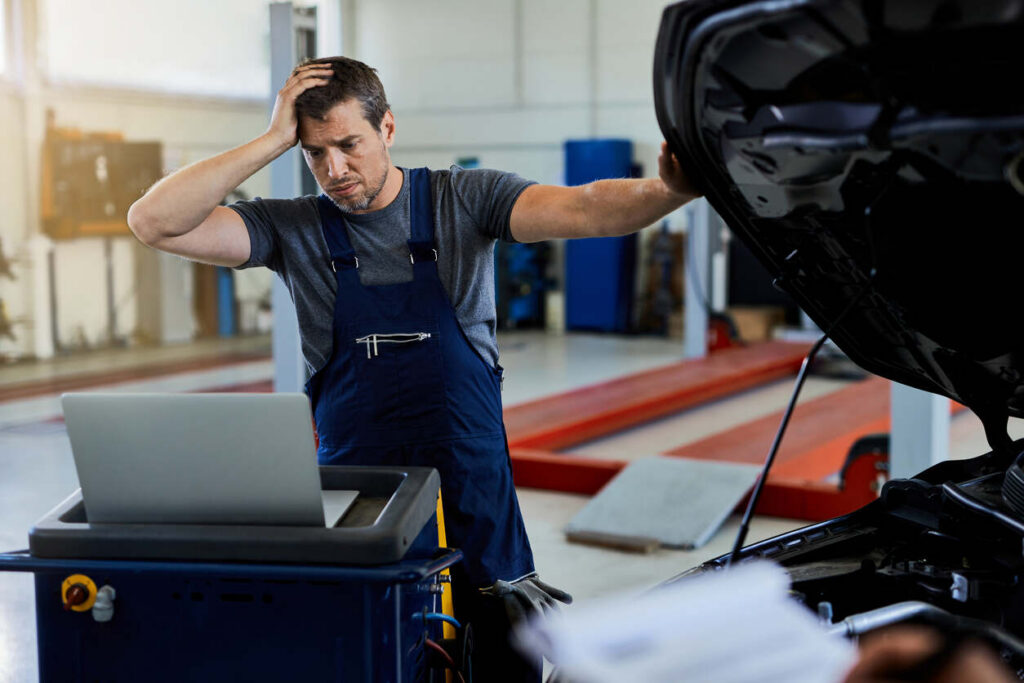
“User Error” Is Not a Legal Standard
California Lemon Law does not evaluate claims based on whether a manufacturer can label a condition as user-related. The law focuses on whether the vehicle conforms to its warranty and whether any defect substantially impairs its use, value, or safety.
A manufacturer must do more than suggest driver involvement.
It must demonstrate that:
- The issue is not caused by a defect covered under warranty.
- The condition falls within normal vehicle operation.
- The vehicle performs consistently as designed.
If the same problem persists despite proper use and multiple repair attempts, the label of “user error” carries little legal weight.
How These Arguments Appear in Service Records
Dealership documentation often reflects the manufacturer’s position. Language used in repair orders can shape how the issue is framed later in a claim.
Common entries include:
- “Operating as designed.”
- “No problem found.”
- “Unable to duplicate customer concern.”
- “Driver-related condition.”
- “Within normal specifications.”
While these statements may appear unfavorable, they do not eliminate a claim. When viewed across multiple visits, they can demonstrate that the manufacturer was repeatedly notified of the issue but failed to correct it.
Why Repetition Undermines the “User Error” Argument
A single unexplained incident may leave room for interpretation. A pattern of repeated complaints does not.
When service records show consistent reports of the same issue:
- The likelihood of user-related causation decreases.
- The focus shifts to whether the manufacturer can provide a permanent fix.
- The repair history begins to reflect a failure to conform to warranty obligations.
California Lemon Law evaluates the totality of the repair history. Repeated unsuccessful attempts are often more persuasive than any single explanation offered by the dealership.
The Role of Consistent Documentation
One of the most effective ways to counter a “user error” defense is through clear and consistent documentation. The way an issue is described over time can significantly affect how it is evaluated.
Important practices include:
- Describing the same symptoms consistently at each visit.
- Avoid vague or changing language when reporting the issue.
- Noting when and how the problem occurs.
- Retaining all repair orders and service records.
- Documenting recurrence shortly after prior repairs.
Consistency helps establish that the issue is ongoing and not dependent on individual driving habits.
When “Normal Operation” Is Not Acceptable
Manufacturers sometimes characterize defects as normal behavior, particularly in cases involving performance, transmission response, or electronic systems. While vehicles may have inherent characteristics, those characteristics must still align with reasonable expectations.
A condition may not be acceptable when:
- It affects the vehicle’s reliability or predictability.
- It interferes with normal driving conditions.
- It creates safety concerns or uncertainty.
- It diminishes the vehicle’s value compared to similar models.
In these situations, labeling the issue as “normal” does not resolve the underlying impairment.
How Legal Analysis Reframes the Issue
In lemon law claims, the focus is not on assigning fault to the driver. It is on evaluating whether the manufacturer has fulfilled its warranty obligations.
This analysis considers:
- The nature and frequency of the defect.
- The number and outcome of repair attempts.
- The impact on use, value, and safety.
- The consistency of the reported issue over time.
When viewed through this framework, arguments based on “user error” often lose relevance if the defect persists and remains unresolved.
When to Push Back Against Manufacturer Explanations
Consumers are often encouraged to continue monitoring the issue or adjust their driving habits. While this may seem reasonable at first, there comes a point when repeated explanations no longer address the problem.
You may want to take further action if:
- The same issue continues despite following dealership recommendations.
- Repair orders repeatedly attribute the problem to driver behavior.
- The dealership cannot provide a clear or permanent solution.
- The condition affects daily driving, safety, or reliability.
- The explanation does not match your experience with the vehicle.
At that stage, the repair history itself may demonstrate that the manufacturer has not corrected the defect.
Speak With Our California Lemon Law Attorney
If a manufacturer or dealership is attributing ongoing vehicle problems to “user error,” you may still have a valid lemon law claim under California law. Repeated, unresolved issues are not excused by shifting blame to the driver.
Shainfeld Law represents California consumers in lemon law matters involving disputed defects and manufacturer defenses. Our attorney evaluates service records, identifies patterns of failed repairs, and challenges unsupported explanations.
Call 949-294-9153 today or contact us online for a free consultation with our Los Angeles lemon law attorney. When the explanation does not match the reality, the law provides a path to accountability.